If you can see mold or smell it, you need a mold inspection - not air quality testing. Air quality testing is the right call when you have symptoms or a musty odor but no visible growth, or when you need documentation that a space is clean after remediation. In Philadelphia's rowhouse basements and attic crawl spaces, the two tests answer different questions, and picking the wrong one wastes $300 to $800 and delays the fix.
This guide breaks down what each test does, what they cost in 2026, and how to choose the right one for your situation.
The short answer: inspection finds the source, air testing measures the air
Mold inspection vs air quality testing which do you need comes down to one question: are you trying to find the mold, or measure what's already airborne? A mold inspection is a visual and moisture assessment that locates the source - the leak, the condensation, the wet drywall. Air quality testing is a lab analysis of spores and particulates floating in the air you breathe.
In Philadelphia, the distinction matters because our housing stock is old. A 1920s rowhouse in Fishtown has different mold risks than a new construction condo in Northern Liberties. The inspection tells you where water is getting in. The air test tells you how bad the contamination has become.
If you already see black staining on a basement joist or smell that damp-earth odor in a bedroom, skip the air test and book a mold inspection and testing Philadelphia PA visit. You'll get a source identified and a remediation plan the same day.
What a mold inspection actually covers
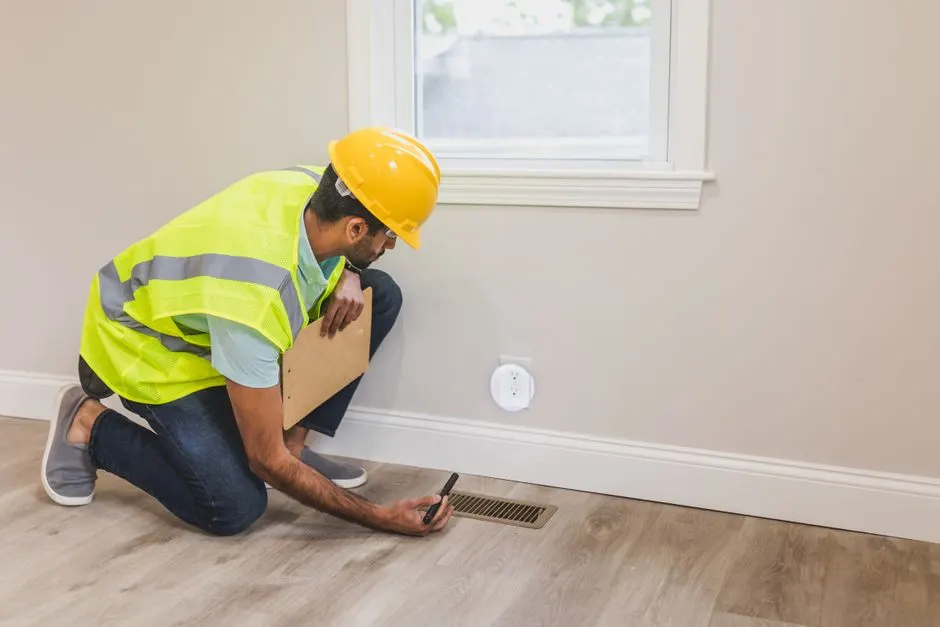
A mold inspection is a hands-on assessment of your home's moisture profile - we check the building, not just the air. Our technicians walk the property with moisture meters, thermal imaging cameras, and a flashlight. We're looking for the conditions that feed mold: leaks, high humidity, poor ventilation, and past water damage.
Here's what a typical inspection includes:
- Moisture mapping - pin-type and pinless meters read the water content in drywall, subfloor, and framing. Anything above 16% is a problem.
- Thermal imaging - infrared cameras show temperature differences behind walls, which often reveal hidden leaks or missing insulation.
- Visual survey - we check the attic sheathing, basement rim joists, bathroom caulk lines, under sinks, and around HVAC air handlers.
- Humidity readings - we log relative humidity in each zone. Philadelphia basements routinely sit at 65-75% RH in summer, well above the 50% threshold where mold thrives.
- Written report - photos, moisture readings, and a scope of work if remediation is needed.
An inspection does not always include lab samples. If we find visible growth, we can take a swab or tape lift and send it to a lab for identification - usually $75 to $150 per sample. That tells you whether you're dealing with common Cladosporium or something more concerning like Stachybotrys (black mold).
For homes with obvious black mold, we move straight into black mold removal Philadelphia PA protocols - containment, negative air, and HEPA filtration - because disturbing toxic mold without containment spreads spores through the house.
What air quality testing actually measures
Air quality testing measures the concentration of mold spores and other particulates in the air - it tells you what you're breathing, not where the mold is growing. A technician places calibrated air sampling pumps in several rooms, usually one outdoor control sample and two to four indoor samples. Each pump runs for 5 to 10 minutes, pulling a known volume of air through a spore trap cassette.
The cassettes go to an accredited lab. Results come back in 2 to 5 business days with a breakdown of spore types and counts per cubic meter. A normal indoor sample should have lower spore counts than the outdoor control. If indoor counts are higher - or if we see water-damage indicators like Chaetomium or Stachybotrys - that's a red flag.
Air testing is also how we verify a job is done. After remediation, a clearance test confirms spore levels have returned to normal. Most Philadelphia remediation projects require a clearance test before we rebuild drywall or reinstall insulation.
If you're dealing with a commercial space - a restaurant, office, or rental property - commercial mold removal Philadelphia PA projects almost always include pre- and post-remediation air sampling for liability and documentation.
Mold inspection vs air quality testing cost in Philadelphia
Typical 2026 pricing in the Philadelphia area runs $300 to $600 for a standalone mold inspection and $400 to $800 for air quality testing with lab analysis. The ranges depend on square footage, number of samples, and whether you need a formal report for a real estate transaction.
Here's a rough breakdown:
- Visual mold inspection only - $250 to $450. Best for a single-family home under 2,500 sq ft with visible mold in one area.
- Inspection plus moisture mapping and thermal imaging - $400 to $650. Recommended for older rowhouses or any home with a finished basement.
- Air quality testing (2-4 indoor samples + 1 outdoor control) - $400 to $700. Includes lab fees and a written report.
- Combined inspection + air testing package - $650 to $1,100. This is what most buyers and sellers order during a real estate transaction.
- Post-remediation clearance testing - $350 to $600. Required by many remediation contracts and often by lenders.
We quote a flat price before we start. No surprise lab fees, no trip charges inside the city. If you're comparing air quality testing Philadelphia PA providers, ask whether the lab fee is included - some companies advertise a low inspection fee and then bill $100 per sample.
When to get air quality testing vs mold inspection
When to get air quality testing vs mold inspection in Philadelphia depends on what evidence you already have. Use this rule of thumb:
- You see mold or water damage → mold inspection. You don't need to pay for air testing to confirm what your eyes already tell you.
- You smell musty odors but see nothing → air quality testing first, then inspection if spores are elevated.
- You have unexplained allergy or asthma symptoms → air quality testing. Spore counts can be high even when surfaces look clean.
- You're buying or selling a home → both. A combined inspection and air test gives you documentation for negotiation.
- You just had remediation done → air quality testing for clearance. This is non-negotiable if you want to confirm the job worked.
We see a lot of homeowners in basement mold removal Philadelphia PA situations who waited too long because they started with an air test, got a vague result, and still didn't know where the mold was. If you can point to a damp wall, start with the inspection.
Do you need both? The case for pairing them
Do you need both mold inspection and air quality testing in Pennsylvania? Not always - but in three situations, pairing them saves you money and time. The first is real estate. A combined report gives you source documentation plus airborne evidence, which is what buyers, sellers, and lenders want to see.
The second is post-remediation verification. An inspection confirms the source is fixed; an air test confirms the air is clean. One without the other leaves a gap. The third is litigation or insurance claims. If you're filing a claim for water damage that led to mold, you need both a moisture report and lab results.
For a typical Philadelphia rowhouse with a finished basement, we usually recommend starting with an inspection. If we find active growth, we scope remediation and include a clearance air test at the end. That sequence avoids paying for an air test that only tells you what the inspection would have found anyway.
Common mistakes we see Philadelphia homeowners make
The most common mistake is buying a $20 DIY mold test kit from a big-box store and treating the result as definitive. Those petri dishes grow whatever lands on them - including harmless airborne spores that are in every home. They don't tell you the source, the species, or the concentration.
Other mistakes:
- Testing the air before fixing the leak. If you have a roof leak or a sweating pipe, air testing is premature. Fix the water source first, then test.
- Skipping the attic and crawl space. In Philadelphia, attic mold from roof leaks and crawl space mold from ground moisture are two of our most common calls. An inspection that only checks the basement misses half the house.
- Trusting a remediation company that also sells the test. There's a conflict of interest if the same company profits from finding mold and removing it. We separate inspection findings from remediation scope so you can decide.
- Ignoring HVAC contamination. If your air handler or ductwork has mold, every time the system runs it spreads spores. We often find this during HVAC mold removal Philadelphia PA inspections - the coil pan is full of standing water and biofilm.
One more: waiting until spring. Mold doesn't go dormant in winter. Philadelphia's freeze-thaw cycles push water into foundation cracks, and indoor humidity from showers and cooking keeps mold active year-round.
When to call a professional
Call a professional when the mold covers more than 10 square feet, when you smell it but can't find it, or when anyone in the home has asthma or a compromised immune system. Those are the thresholds where DIY cleaning becomes risky and ineffective.
Our team at Mold Removal Philly handles both sides of the question - inspection and air testing - under one roof. We'll tell you which test you actually need, and we won't sell you an air test if a visual inspection already answers the question. If remediation is needed, we scope it clearly and show you the moisture readings before and after.
We work across Philadelphia County, from Roxborough and Manayunk to South Philly and the Northeast. If you're in a neighborhood with a lot of 1920s housing stock, expect us to spend extra time in the basement and attic - that's where the problems hide.
Frequently Asked Questions
What is the difference between mold inspection and air quality testing in Philadelphia?
A mold inspection is a visual and moisture assessment that locates mold and its water source. Air quality testing is a lab analysis of airborne spores. Inspection finds the problem; air testing measures how contaminated the air is. Most Philadelphia homes need inspection first, air testing only for verification or when mold isn't visible.
Do I need both mold inspection and air quality testing in Pennsylvania?
Not always. You need both if you're buying or selling a home, filing an insurance claim, or verifying remediation. For a simple visible mold problem, an inspection alone is enough. Pairing them costs $650 to $1,100 in 2026 and gives you source documentation plus airborne evidence.
How much does mold inspection vs air quality testing cost in Philadelphia?
In 2026, a standalone mold inspection runs $300 to $600. Air quality testing with 2-4 indoor samples and a control runs $400 to $800. A combined package is $650 to $1,100. Post-remediation clearance testing is $350 to $600. Lab fees are usually included in those ranges.
Which is better for mold detection in Philadelphia?
Mold inspection is better for detection because it finds the source. Air quality testing detects spores but doesn't tell you where they're growing. If you see or smell mold, start with an inspection. If you only have symptoms or odors, start with air testing.
How long does a mold inspection take?
A typical Philadelphia home inspection takes 1.5 to 3 hours, depending on square footage and how many areas we need to check. Air quality testing adds 30 to 45 minutes on site, plus 2 to 5 business days for lab results.
Get help with mold removal in Philadelphia
If you're not sure which test you need, call us and describe what you're seeing or smelling. We'll tell you straight - inspection, air test, or both - and give you a flat price before we schedule.
Call Mold Removal Philly at +1 2152813400 to book your inspection or air quality test in Philadelphia.