
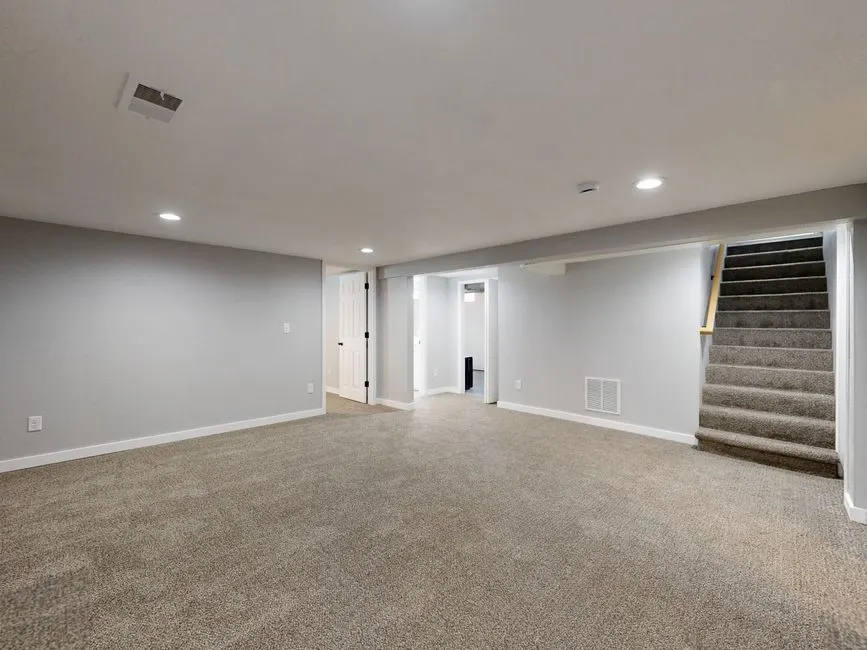
Dehumidification for Philadelphia homes basement and attic tips comes down to one number: keep indoor relative humidity between 30% and 50% year-round. Philadelphia's humid summers, tight rowhome construction, and older stone foundations push basements and attics well past 60% RH for months at a time, and mold colonizes porous surfaces within 24 to 48 hours once that happens. This guide walks through sizing, placement, and seasonal schedules that actually work in Philadelphia's housing stock, plus the warning signs that mean you should stop guessing and call us.
Why Philadelphia homes need dehumidification
Philadelphia's climate delivers roughly 45 inches of rain per year and summer dew points that regularly sit above 65°F, which means outdoor air carries enough moisture to soak a basement the moment it enters. Most of the city's housing was built before 1950, so you're dealing with stone or brick foundations, unsealed crawl spaces, and brick party walls that wick groundwater inward after every storm.
Attics in Philadelphia have the opposite problem. Roof deck temperatures hit 130°F to 150°F in July and August, and when warm attic air meets a cool air-conditioned ceiling, condensation forms on the underside of the roof sheathing. That's why we find mold on attic rafters in Fishtown and South Philly rowhomes even when the basement is bone dry.
Dehumidification is the mechanical half of moisture control. The other half is stopping the water from getting in. If you're seeing efflorescence, peeling paint, or a musty smell that returns every spring, it's worth scheduling a mold inspection and testing Philadelphia PA visit before you buy another appliance.
How do I dehumidify my Philadelphia basement and attic?
Dehumidification for basements and attics in Philadelphia, Pennsylvania works in three steps: seal the obvious air leaks, run a correctly sized dehumidifier on a continuous drain, and verify humidity with a $15 hygrometer instead of trusting your nose. Skip any one of those and the unit runs nonstop without fixing the problem.
- Seal first. Foam or caulk rim joists, sill plates, and any gap around pipes and wires. In a typical Philadelphia rowhome basement, that's 20 to 40 linear feet of rim joist.
- Drain continuously. Run a 1/2-inch ID hose to a floor drain, laundry sink, or condensate pump. Emptying a 50-pint tank twice a day gets old by week two.
- Measure. Place a hygrometer at chest height, away from the unit's exhaust. Target 40% to 45% in summer, 30% to 40% in winter.
For attics, add a passive vent or ridge vent if you don't have one, then run a dehumidifier only during the humid months. Attics above 100°F will cook a standard compressor unit, so look for a unit rated for high-temperature operation.
What size dehumidifier do I need in Philadelphia?
Size by square footage and how wet the space actually is, not by the sticker on the box. A damp-but-not-wet Philadelphia basement under 1,000 sq ft needs a 30-pint unit; a wet basement of 1,500 to 2,200 sq ft needs 50 pints; anything with visible standing water or a history of flooding needs 70 pints or a commercial-grade unit.
- 30-pint: finished basement under 1,000 sq ft, mild mustiness, no history of water.
- 50-pint: 1,000-2,200 sq ft, damp walls, occasional seepage after heavy rain.
- 70-pint: 2,200-3,000 sq ft, or any space that has flooded in the last five years.
- Commercial (100+ pint): crawl spaces, multi-unit buildings, and post-flood drying.
Pint ratings are measured at 80°F and 60% RH. A Philadelphia basement sitting at 60°F in April will pull 30% to 40% less water than the rating suggests, so size up one tier if your basement runs cold.
Basement dehumidification tips for Philadelphia rowhomes
Philadelphia rowhome basements are long, narrow, and often divided into two or three rooms, which means one dehumidifier in the front room won't dry the back. Place the unit centrally, keep doors open, and add a small fan to push air toward the rear.
Set the unit 6 to 12 inches off the floor and at least 12 inches from any wall so the intake and exhaust can breathe. Don't park it next to the water heater or furnace - those appliances add heat and moisture to the air the unit is trying to dry.
If your basement has a sump pit, check that the pump is actually running before you trust the dehumidifier to keep up. A failed pump during a July thunderstorm can dump 2 to 4 inches of water into the space in under an hour. We install and service these systems through our sump pump installation and repair Philadelphia PA service, and it's the cheapest insurance you can buy for a finished basement.
For basements that stay damp no matter what you do, foundation waterproofing and a vapor barrier are the permanent fix. Dehumidification buys you time; sealing the envelope stops the water at the source.
Attic dehumidification for mold prevention in Philadelphia
Attic dehumidification for mold prevention in Philadelphia is less about running a machine and more about fixing ventilation. If your attic hits 70% RH in August, the problem is almost always blocked soffit vents, a missing ridge vent, or bathroom and kitchen exhaust fans dumping humid air straight into the attic instead of outside.
Start with airflow. You want roughly 1 sq ft of net vent area for every 150 sq ft of attic floor when you have both intake and exhaust vents, or 1 per 300 sq ft if you have a vapor barrier on the attic floor. Most Philadelphia rowhomes we inspect are running at half that.
Once airflow is right, a 30-pint dehumidifier with a continuous drain handles the shoulder months - April, May, September, October - when outdoor humidity is high but temperatures aren't hot enough to drive natural ventilation. During July and August, ventilation alone usually does the job.
Check the roof before you blame the dehumidifier. A single missing shingle or a cracked flashing boot around a vent pipe can leak a cup of water a day into the attic, and that's enough to grow mold on the sheathing within a week. Our roof leak repair Philadelphia PA team tracks those down with a hose test, then we remediate any mold the leak left behind.
How often should I run a dehumidifier in Philadelphia?
Run a Philadelphia basement dehumidifier continuously from May through September, and on a 30% to 40% RH setpoint the rest of the year. Attic units typically run June through September only. The unit's humidistat should cycle it on and off - if it never shuts off, it's undersized or the space is leaking air.
Here's the seasonal schedule we give customers:
- April-May: basement on continuous, attic on as needed. Spring rain and rising dew points are the trigger.
- June-August: both on continuous. This is peak mold season in Philadelphia.
- September-October: basement on continuous, attic on as needed. Hurricane remnants are the wildcard.
- November-March: basement on 30% setpoint, attic off. Heating dries the air; you're just managing groundwater.
Expect to pay $15 to $40 per month in electricity for a 50-pint unit running 12 hours a day at Philadelphia's 2026 PECO rates. That's cheaper than a single mold remediation job, which runs $1,500 to $6,000 depending on square footage and material removal.
Common mistakes we see in Philadelphia homes
The same handful of mistakes show up in nearly every Philadelphia home we inspect. Fixing them costs less than a new dehumidifier and usually solves the problem outright.
- Buying by price, not pints. A $150 20-pint unit in a 1,800 sq ft basement will run 24/7 and still lose ground.
- Emptying the tank manually. The unit shuts off when full - usually overnight, which is exactly when humidity climbs.
- Placing the unit against a wall. Restricted airflow cuts capacity by 20% to 30%.
- Ignoring the crawl space. A damp crawl space pushes moisture up through the floor into the living space all summer.
- Running a dehumidifier in a space that's actively leaking. You're drying water that's still coming in. Fix the leak first.
- Trusting a $10 analog hygrometer. They drift 10% to 15% within a year. Replace or calibrate annually.
If you've corrected all six and humidity still won't drop below 55%, the moisture is coming through the envelope. That's a job for foundation waterproofing Philadelphia PA, not another appliance.
When to call a professional
Call us when you see mold - not when you smell it. Visible growth on joists, drywall, or attic sheathing means the colony is already established, and a dehumidifier will slow it down but won't kill it. Disturbing mold without containment spreads spores through the house.
We also get called when humidity won't drop below 55% after two weeks of continuous running, when there's a musty smell in a bedroom that shares a wall with the basement, or when a home inspection flags moisture before a sale. Our team handles mold remediation Philadelphia PA with containment, HEPA filtration, and post-clearance verification, and we'll tell you honestly if you just need a bigger dehumidifier.
Frequently Asked Questions
How do I dehumidify my Philadelphia basement and attic?
Seal air leaks first, then run a correctly sized dehumidifier on a continuous drain at a 40% to 45% RH setpoint for the basement and 45% to 50% for the attic. Verify with a hygrometer, not your nose. Attics also need 1 sq ft of net vent area per 150 sq ft of floor.
What size dehumidifier do I need in Philadelphia?
Match pints to square footage and wetness: 30 pints for damp basements under 1,000 sq ft, 50 pints for 1,000-2,200 sq ft, and 70 pints for anything larger or with a flooding history. Cold Philadelphia basements run 30% to 40% below the rated pint capacity, so size up one tier.
Does dehumidification prevent mold in Pennsylvania homes?
Yes, if you hold indoor RH below 50%. Mold needs 24 to 48 hours of sustained moisture to colonize, and dehumidification keeps surfaces dry enough that spores can't germinate. It won't fix an active leak or kill existing growth - that requires remediation.
How often should I run a dehumidifier in Philadelphia?
Run basement units continuously May through September and on a 30% setpoint the rest of the year. Attic units run June through September. If the unit never cycles off, it's undersized or the space is leaking air - both are fixable.
Can I just open windows instead of running a dehumidifier?
Not in Philadelphia from May through September. Outdoor dew points above 65°F mean open windows add moisture rather than remove it. Ventilate in spring and fall when outdoor RH is below your indoor target, and keep windows shut during the humid months.
Get help with mold removal in Philadelphia
If your basement or attic has visible mold, a musty smell that won't quit, or humidity that stays above 55% no matter what you run, our team can diagnose it in one visit and give you a written plan with upfront pricing. We handle mold removal Philadelphia PA for rowhomes, twins, and single-family homes across the city.
Call us at +1 2152813400 to schedule an inspection. We'll tell you what's causing the moisture, what it costs to fix, and whether you need remediation or just a better dehumidification setup.